
If you're craving a bright, tropical twist on dinner, this Coconut-Crusted Salmon with Fresh Pineapple Salsa Recipe is exactly the ticket. It’s a delightful balance of toasty coconut crunch meeting juicy, zingy pineapple salsa that feels like a mini vacation on your plate. Whether you’re cooking for a casual weeknight or impressing at a weekend gathering, you’ll find it’s as easy as it is impressive.

Jump to:
Why You’ll Love This Coconut-Crusted Salmon with Fresh Pineapple Salsa Recipe
This recipe is a vibrant celebration of textures and flavors that really come together without fuss. The crunchy, golden coconut coating adds a satisfying bite to buttery salmon, while the fresh pineapple salsa delivers a punch of natural sweetness and a hint of spice. It's refreshing but comforting, perfect for warmer months yet cozy enough when you want a taste of the tropics anytime.
- Texture you want: Crispy, golden coconut crust with tender flaky salmon beneath.
- Flavor that pops: Juicy pineapple salsa balances sweet, spicy, and tangy notes.
- Everyday ingredients: Pantry staples combined with fresh fruit and herbs you can easily find.
- Works for any night: Great for quick dinners or special occasions with minimal prep.

Ingredient Spotlight
To master this Coconut-Crusted Salmon with Fresh Pineapple Salsa Recipe, a few key ingredients make all the difference. Fresh, firm salmon lets the crust shine while juicy pineapple keeps the salsa vibrant. And don’t skip the panko combined with shredded coconut—that’s what gives you that perfect crunch every time.
- Salmon fillets: Choose fresh, skinless fillets for easy cooking and a clean crust.
- Unsweetened shredded coconut: Keep it unsweetened to avoid an overly sweet crust.
- Fresh pineapple: Ripe and juicy pineapple brings the salsa’s bright, tropical flavor alive.
Seasonality & Sourcing
Salmon is widely available year-round, but wild-caught varieties in late spring through early fall often have the best flavor and texture. For your fresh pineapple, choosing a ripe, fragrant pineapple at the market will make a huge difference; it should smell sweet and have a slight give when you press the skin. If fresh pineapple isn’t in season, frozen chunks thawed undrained can work—just drain excess juice to avoid watery salsa.
Step-by-Step: How to Make It
Prep & Preheat
First, get your salsa ready! Dice the pineapple, red bell pepper, and red onion finely, then mince the jalapeño (removing seeds if you prefer less heat). Toss everything with lime juice, chopped cilantro, and salt to taste. While those flavors mingle, preheat your oven to 400°F (or warm your skillet over medium heat if frying). Setting everything in motion early helps your kitchen smell amazing and saves time later. One tip: avoid skipping the lime juice—it brightens and balances the salsa wonderfully.
Step 2 — Cook & Build Flavor
Set up three shallow bowls for breading: flour seasoned with salt and pepper, whisked eggs, and a mixture of shredded coconut and panko breadcrumbs. Coat each salmon fillet in flour first, then egg, and pat on the coconut-panko blend firmly so it sticks well. Whether you bake on a greased sheet or gently fry in coconut oil, aim for golden brown crusts and salmon that flakes easily with a fork. This usually means 12-15 minutes in the oven, or about 4-5 minutes per side in a skillet. If your salmon seems underdone, a couple of extra minutes won’t hurt; overcooking, though, dries it right out.
Step 3 — Finish & Rest
Once cooked, let your coconut-crusted salmon rest for a few minutes so juices redistribute and the crust firms up just a bit more. Meanwhile, give the pineapple salsa a gentle stir to lift any settled juices. When plating, spoon the salsa generously on or beside the salmon—this helps keep that crunch from getting soggy too quickly. Trust me, that contrast of textures is what makes this Coconut-Crusted Salmon with Fresh Pineapple Salsa Recipe so satisfying.
Troubleshooting Coconut-Crusted Salmon with Fresh Pineapple Salsa Recipe
Worried about soggy crust? Make sure to press your coconut mixture firmly onto the salmon and don’t let the salsa sit on top for too long before serving. If your salmon turns out dry, try lowering heat slightly or shortening cook time next round—every stove and fillet thickness varies. And if the salsa feels bland, don’t be shy with lime juice or a pinch more salt; acidity and seasoning bring out all the tropical flavors beautifully.
Pro Tips
I find that coating the salmon with the coconut mixture twice gives you an even crispier crust. Also, coconut oil adds a subtle sweetness that pairs better than olive oil in frying, but if you prefer baking, a light brushing of oil keeps the crust golden without sogginess.
- Heat control: Medium heat is key—it crisps the crust without burning the coconut.
- Timing window: Serve immediately after adding salsa for best crunch.
- Make-ahead move: Salsa can be prepped a day ahead to deepen flavors.
- Avoid this pitfall: Don’t overcrowd the pan when frying—it lowers the oil temperature and ruins crispiness.
Variations & Substitutions
You can swap salmon for other firm fish like mahi-mahi or cod if you want a lighter option. For a gluten-free twist, replace panko with crushed gluten-free crackers or almond flour. If you prefer less heat, skip the jalapeño or use mild green pepper. And for a dairy-free version, coconut oil is a perfect fry option, but olive oil also works well in the oven.
Great Debates
Butter vs. oil often comes up here. I usually lean into coconut oil for frying because it complements the coconut crust so nicely without overpowering. Butter can burn too quickly at medium-high heat. If you bake, a light brush of olive oil or melted coconut oil works better than butter for keeping the crust crispy and flavor balanced.
Make-Ahead, Storage & Freezing
You can prepare the pineapple salsa up to 24 hours ahead—just cover and refrigerate. Leftover cooked salmon keeps 2 days in the fridge in an airtight container but is best reheated gently to preserve the crust. Freezing cooked coconut-crusted salmon isn’t ideal as the crust gets soggy upon thawing, but you can freeze the salsa independently for up to one month.
Yield & Conversions
This Coconut-Crusted Salmon with Fresh Pineapple Salsa Recipe serves 4 comfortably. Salmon fillets are about 6 ounces each. To double, simply double all ingredients—breading and salsa scale nicely. For half or single servings, reduce quantities accordingly: 3 oz salmon fillets and halve the other ingredients. For metric, 6 oz is roughly 170 grams, and 400°F equals about 200°C.
Serving Ideas & Pairings
I love serving this coconut-crusted salmon with steamed jasmine rice or coconut rice to amplify the tropical vibe. A crisp green salad with a light vinaigrette cuts through the richness perfectly. For something heartier, roasted sweet potatoes or grilled asparagus are great. And a drizzle of a simple lime crema or avocado mousse can add a creamy finish that’s nothing short of heavenly.
FAQs
Yes, you can use frozen salmon fillets if thawed completely before cooking. Pat dry well to ensure the coconut crust adheres properly and gets nice and crispy.
You can substitute regular breadcrumbs or crushed crackers, though panko is best for light, extra crunch in this recipe.
Absolutely! The salsa is still flavorful without heat. You can add a pinch of black pepper or a pinch of mild chili flakes if you want a slight kick.
Yes, that’s a great method. Bake until almost done and firm, then quickly sear in a hot pan to toast the coconut crust without overcooking the salmon.
Notes, Tools & Special Equipment
A sturdy non-stick or cast-iron skillet works best for frying the crust to golden perfection. For baking, use a rimmed baking sheet lined with parchment or lightly greased to prevent sticking. A fish spatula helps flip the fillets gently without disturbing the crust. A digital thermometer can be handy: salmon is perfectly cooked at 125-130°F (52-54°C) for medium. And finally, three shallow bowls make breading smooth and mess-free!
PrintPrintable Recipe 📖
Coconut-Crusted Salmon with Fresh Pineapple Salsa Recipe
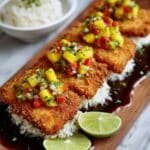
This Coconut Crusted Salmon recipe features crispy salmon fillets coated in a crunchy coconut and panko breadcrumb crust, served with a vibrant and fresh pineapple salsa. Perfectly cooked either baked or pan-fried, it offers a delightful balance of textures and tropical flavors that make for a healthy and satisfying main course.
- Prep Time: 20 minutes
- Cook Time: 15 minutes
- Total Time: 35 minutes
- Yield: 4 servings
- Category: Main Course
- Method: Baking
- Cuisine: Fusion
- Diet: Gluten Free
Ingredients
Salmon and Breading
- 4 salmon fillets (6 oz each)
- 1 cup unsweetened shredded coconut
- ½ cup panko breadcrumbs
- ¼ cup all-purpose flour
- 2 large eggs
- Salt and pepper to taste
- 2 tablespoons coconut oil (or olive oil for baking)
Pineapple Salsa
- 1 cup fresh pineapple, diced
- ½ red bell pepper, finely chopped
- ¼ cup red onion, finely chopped
- 1 jalapeño, seeded and minced
- Juice of 1 lime
- ¼ cup fresh cilantro, chopped
- Salt to taste
Instructions
- Prepare the Salsa: In a medium bowl, combine the diced pineapple, red bell pepper, red onion, jalapeño, lime juice, and cilantro. Season with salt to taste. Mix well and set aside to allow the flavors to meld.
- Preheat the Oven or Skillet: For baking, preheat your oven to 400°F (200°C). For frying, preheat a skillet over medium heat with 2 tablespoons of coconut oil.
- Prepare the Breading Station: Set up three shallow bowls: in the first bowl, place the flour seasoned with a pinch of salt and pepper; in the second bowl, whisk the eggs until well combined; in the third bowl, mix the shredded coconut and panko breadcrumbs.
- Bread the Salmon: Dredge each salmon fillet first in the flour, shaking off excess, then dip into the eggs, letting excess drip off, and finally coat in the coconut and panko mixture, pressing gently to adhere.
- Cook the Salmon: For baking, place the breaded salmon on a greased baking sheet and bake for 15 minutes until cooked through and golden brown. For frying, add fillets to the skillet and cook for 5 minutes per side until golden and cooked through.
- Serve: Plate the coconut crusted salmon fillets and top generously with the pineapple salsa. Serve with steamed jasmine rice or a fresh green salad for a complete meal.
Notes
- Use fresh salmon fillets for the best flavor and texture.
- You can substitute olive oil for coconut oil if preferred or for baking.
- Adjust the jalapeño quantity in the salsa to control the heat level.
- For extra crispiness when baking, broil the salmon for the last 2 minutes watching carefully to avoid burning.
- Leftover pineapple salsa can be stored in the fridge for up to 2 days.


Leave a Reply